
Birding Uganda With a Local Guide: From Entebbe to Kibale
By Bird Tripping · · 7 min read
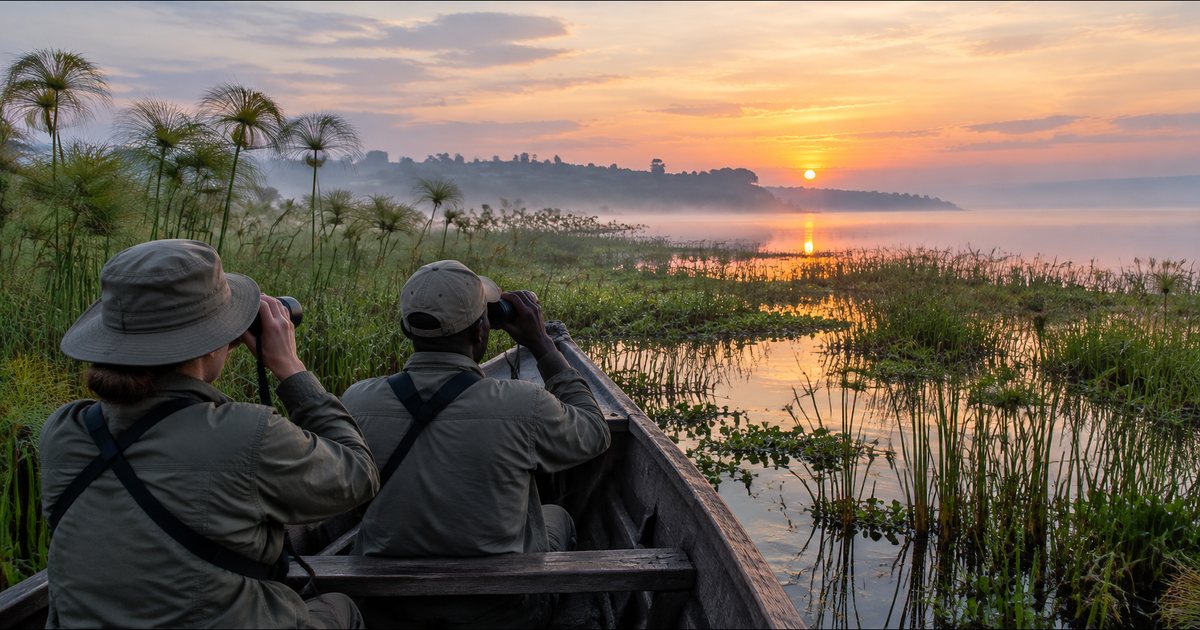
Uganda gets described as the place where East and Central Africa meet, and for birders that's not just a tourism line. Savanna, papyrus swamp, lakeshore, and real lowland-to-montane forest all fit inside one fairly compact country. That mix is the reason people come. It's also why the first trip can feel overwhelming to plan.
Here's a simpler way in. Most international visitors land at Entebbe, on the shore of Lake Victoria, and some very good birding starts within an hour of the airport. From there, the forests of the west, Kibale in particular, are a long but manageable drive. A local guide can help you decide how far to go and how fast.
This isn't a target list or a promise of any bird. It's a planning guide for a first Uganda trip built around Entebbe and, if you have the days, Kibale.
Why start a Uganda trip in Entebbe
Entebbe is easy to overlook. Plenty of travelers treat it as a place to sleep before heading somewhere else. That's a mistake for birders.
The town sits on a peninsula jutting into Lake Victoria, with lakeshore, gardens, and wetland edges close by. After a long flight, a gentle first morning near your hotel is a good way to get your eyes in, learn some common African birds, and see how you and your guide work together before committing to bigger days.
It also keeps options open. If a flight is late or you're wiped out, a half day near Entebbe is easy to rearrange. A five-hour drive west isn't.
Start with the Entebbe guides page and the wider Uganda directory.
Mabamba Swamp and the shoebill question
Let's be direct about it: a lot of people book an Entebbe birding morning because of the Shoebill. Mabamba Bay, a papyrus wetland on Lake Victoria west of Entebbe, is one of the places where it's often reported, and it's close enough to the airport to fit into an arrival or departure day.
The usual format is a small motorized or paddled canoe through channels in the papyrus, led by local guides who know the swamp. Getting there involves a drive and, depending on the route, a short ferry or boat crossing. Ask your guide how they do it and what time you'll need to leave. Early starts are common.
A few honest notes:
- It isn't guaranteed. Shoebills can sit still for long periods deep in vegetation. Some mornings are quick, some take patience, some miss. A good guide will say so up front.
- The swamp is more than one bird. Herons, kingfishers, jacanas, and papyrus specialists can make the morning worthwhile on their own. Tell your guide if those interest you too, so the boat isn't racing past everything else.
- Boat etiquette matters. Keep voices low, stay seated, and don't push for the boat to get closer than the guide thinks is right. Our post on birding ethics with a local guide covers approach distance and crowding at a sensitive bird.
On Bird Tripping, Mabamba swamp shoebill tours and Bird watching lists a Mabamba Swamp shoebill tour out of Entebbe, and Mabamba trips is another Entebbe-based guide profile. There's also a Kampala / Mabamba page if you're staying on the Kampala side.
More birding around Entebbe
If you have a spare afternoon or another morning, guides often work the lakeshore and green spaces around town. The Entebbe Botanical Gardens are a common stop with mature trees right by the lake. Short boat trips on Lake Victoria are another option. The same Entebbe profile lists an Entebbe Equator and Boat Cruise, a shorter outing that's handy when you don't want a full day.
These aren't consolation prizes. For a first-time visitor to Africa, an unhurried morning on common lakeshore birds can be one of the best parts of a trip. Everything is new.
Heading west to Kibale and Bigodi
Kibale National Park, near Fort Portal in western Uganda, is best known for chimpanzee tracking. It's also serious forest birding. Expect tall trees, dim light, and birds that are often heard before they're seen. Some of Kibale's most-wanted forest birds are famously shy, and guides there will tell you that patience and timing count for more than luck.
Next to the park, the community-run Bigodi Wetland Sanctuary has a walking trail through swamp and forest edge. Many visitors pair it with Kibale. It's a different rhythm: gentler walking, more open views, and fees that support local projects.
The catch is distance. Driving from the Entebbe or Kampala area to Fort Portal usually takes most of a day, depending on traffic and road works. That shapes everything. Kibale works much better as two or three nights than as a dash.
Bird Tripping's Fort Portal and Kibale page currently shows a listing created from public information, not a guide who has joined yet. If you're arranging a longer trip, it's also worth asking an Entebbe-based guide whether they run multi-day routes west or can point you to someone local.
Seasons in Uganda
Uganda sits on the equator, so you won't get a big summer and winter. What you get is wet and dry periods, and they vary by region and by year.
Broadly, many visitors describe two drier windows (roughly December to February and June to August) and two rainier ones (roughly March to May and around October to November). Treat those as rough shapes, not rules.
What that means in practice:
- Drier months usually mean easier roads and forest trails. They're also busier, and permits for popular activities can go faster.
- Wetter months can mean muddy trails, slower driving, and rain cutting a session short. They can also mean greener country, fewer visitors, and breeding activity for some birds.
- Forest birding happens early regardless. Dawn and the first few hours are the main event, with a slower middle of the day.
Rather than asking "what's the best month," ask your guide: For Entebbe and Kibale on my dates, what does the weather usually do, and how would you plan around it?
Three ways to shape the trip
Entebbe only (one to two days). Good for a stopover, a work trip, or the start or end of a safari. One morning for Mabamba, one for the lakeshore or gardens. Low effort, lots of new birds.
Entebbe plus Kibale (five to seven days). Arrive and bird Entebbe, drive west, give Kibale and Bigodi two or three dawns, then drive back. Add a buffer day somewhere. Roads and weather in Uganda reward slack in the plan.
A longer loop. Uganda's national parks spread across the west and southwest, and multi-day guides can link several of them. That's a bigger conversation with a guide about pace, lodging, and driving time. Bird Tripping also lists a guide area for Bwindi if you're looking that far.
Whatever the shape, ask whether a guide drives, provides the vehicle, or works only on foot or by boat at one site. Uganda trips often mix a driver-guide with site-based local guides, and it helps to know who's doing what.
Permits, fees, and paperwork
- Park and activity fees. National parks in Uganda are managed by the Uganda Wildlife Authority, which sets entry fees and permit prices. Chimpanzee tracking in Kibale needs its own permit, usually booked well ahead. Ask your guide what's included in a quote and what you pay separately.
- Community sites. Places like Mabamba and Bigodi have their own local fees and guides. Your guide should know the current arrangement.
- Entry and health. Check current visa and health entry requirements, including vaccination certificates, with official sources before you book flights, and talk to a travel clinic about malaria prevention. Our first international birding trip guide has a fuller checklist.
- In writing. Get price, inclusions, deposit, and cancellation terms in writing before paying anything.
Bird Tripping is a free directory. You contact guides directly and arrange booking and payment with them. We don't charge a booking fee.
Finding a Uganda guide on Bird Tripping
- Open the Uganda directory, or go straight to Entebbe if you're starting near the airport.
- Read each profile: where they guide, whether they offer day trips or multi-day tours, group size, and what a tour includes.
- Message a guide with your dates, how many days you have, whether Kibale is in the plan, and what kind of birding you enjoy.
- Use the questions in our how to choose a local bird guide checklist. Specific, hedged answers are a good sign. Guarantees aren't.
If nobody listed fits your plans, the Uganda page also has a "Request a tour" option where you share your dates and Bird Tripping asks local guides for you.