
Mindo Cloud Forest Birding From Quito: How to Plan a Guided Day
By Bird Tripping · · 6 min read
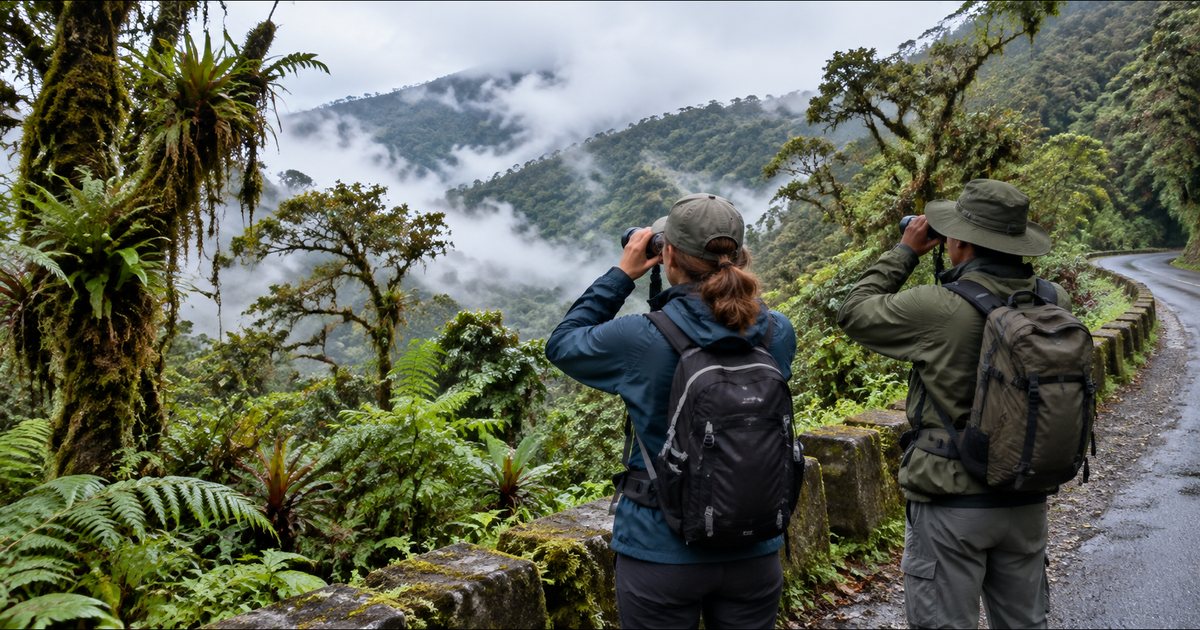
Few capital cities put you this close to a cloud forest. From Quito, a road drops off the western side of the Andes, through the Tandayapa Valley, toward the town of Mindo. In a couple of hours you go from cold highland air to warm, dripping forest full of moss and epiphytes. That is why so many birders, including people who are in Ecuador for other reasons, try to fit a Mindo day into their trip.
You can absolutely do it on your own. But the area is a patchwork of private reserves, feeder gardens, and side roads, and the best birding depends on reaching the right place at the right hour. That's where a local guide earns their fee.
As usual, no species promises here. This is about how a guided Mindo day works and how to plan one that fits you.
Why Mindo works so well from Quito
The western slope of the Andes in northern Ecuador is part of the Chocó Andino region, recognized by UNESCO as a biosphere reserve. Forest still covers a lot of the slope, and private reserves and community projects protect more of it.
For a visitor, the practical points are simple:
- It's close. Mindo is roughly two hours from Quito by road, depending on traffic and which route you take.
- There's a lot of infrastructure. Lodges, reserves with trails, and feeder gardens have grown up around birding.
- The elevation range is huge. You can bird several distinct forest zones in one day just by stopping at different heights on the way down.
The Mindo page, the Quito page, and the wider Pichincha area on Bird Tripping are good places to start.
The drive is part of the birding
There are two broad ways down. The main paved road is faster. The older road through Nono and the Tandayapa Valley, often called the Paseo del Quinde or Ecoruta, is slower and much more interesting for birders. It winds through forest and passes reserves and lodges along the way.
Many guides take the old road at least one way and stop often. Sometimes the best hour of the day is on a roadside pull-off, listening for a mixed flock moving through the trees. If you're paying for a full day, ask your guide which route they'll use and why. "We'll take the old road down and the fast road back" is a common and sensible plan.
Some guides also start higher, above Quito, on the slopes of Pichincha volcano, before heading down. Yanacocha Reserve is one of the better-known high-elevation sites. That makes for a very long day, so it depends on your stamina and your goals.
Elevation zones in one day
Quito sits at roughly 2,800 meters (about 9,200 feet). Mindo is much lower, around 1,200 to 1,300 meters (roughly 4,000 feet). Between them the forest changes more than once.
Your guide won't use textbook labels, but the shape looks like this:
High forest and treeline (above Quito). Cold, often windy, sometimes misty. Hummingbirds and mixed flocks of tanagers and flowerpiercers are typical of this kind of habitat. Bring a warm layer.
Upper cloud forest (Tandayapa area). Moss-heavy trees, frequent fog, and a lot of activity at feeders in many lodges. This is where many people get their first close looks at Andean hummingbirds.
Lower cloud forest and foothills (around Mindo and below). Warmer, with a different cast of birds again. Toucans, barbets, and tanagers are often reported, and some guides know of leks or fruiting trees worth a stop.
You can't do all of these well in one day. Tell your guide what matters most. Hummingbirds and photography? Long trail walks for forest birds? A bit of everything? They'll weight the day accordingly.
What a guided Mindo day usually looks like
Every guide does it differently, but a typical full day goes something like this:
- Very early pickup in Quito. Often before dawn, to be in forest when birds are most active.
- Morning stops on the way down. Roadside birding, a reserve trail, or a feeder garden, depending on your interests.
- Late morning at a reserve near Mindo. Trails, viewpoints, or feeder setups.
- Lunch. Sometimes included, often not.
- Afternoon. Lower-elevation sites, more feeders, or an early return if rain sets in.
- Drive back to Quito, usually arriving in the evening.
The Mindo Cloud Forest Birdwatching Tour listed by Ecuador Birds, a Quito-based guide on Bird Tripping, is a full-day trip for up to eight birders. Their listing says private transport, reserve entrance, and a telescope are included, and lunch, travel insurance, and tips are not. That's a useful baseline for comparing other quotes.
Day trip or overnight?
Day trip. Works if you're short on time or based in Quito for other reasons. The trade-off is that you spend some of the best early light driving, and you're tired by the drive home.
One or two nights near Mindo or Tandayapa. You wake up in the forest. Dawn birding starts outside your door, and you get a second morning if weather wrecks the first. If birds are a main reason for your trip, this is usually the better choice.
A longer Ecuador trip. Mindo is often the first stop on a bigger route that goes on to the eastern slope or the Amazon. If that's your plan, look for guides who list several Ecuador regions. The Ecuador directory has guides who cover the Andes, the Amazon, and the south.
Weather, clothing, and altitude
- Rain is normal. It's a cloud forest. Afternoon showers are common, and some months are wetter than others. Ask your guide how your dates usually behave and plan to bird hardest in the morning.
- Layers. You may start near freezing above Quito and finish in warm, humid forest. A warm layer, a rain jacket, and quick-drying clothes cover most of it.
- Footwear. Trails can be muddy and steep. Waterproof shoes with good grip help. Some reserves lend rubber boots; ask.
- Optics. Fog and humidity fog up lenses. A cloth and a dry bag for your camera are worth packing.
- Altitude. If you've just landed in Quito, take a day to adjust before a pre-dawn start, especially if the plan includes high sites like Yanacocha. Our post on planning your first international birding trip covers health and travel prep more fully.
Reserves, feeders, and fees
Much of the Mindo-area birding happens on private land: family reserves, lodges, and community projects. Most charge an entrance fee, and some have specific rules about timing, photography, or group size.
A few well-known reserves are famous for patient work with shy forest birds. Refugio Paz de las Aves, near Nanegalito, is one example often mentioned by visiting birders; you'll find it on Bird Tripping's Mindo / Nanegalito page as a listing created from public information. Visits there are typically arranged ahead, so check directly or ask your guide.
Feeders bring birds close, which is wonderful for photos. They also come with etiquette. Follow the reserve's rules, keep your voice down, and don't move feeders or perches. Our post on birding ethics with a local guide covers playback, feeders, and photography.
When you get a quote, ask which reserves are included and whether entrance fees are part of the price.
Finding a Mindo guide on Bird Tripping
- Start at Mindo or Quito depending on where you're staying.
- Read the profiles and tour listings: pickup location, length, group size, and inclusions.
- Message a guide with your date, where you're staying in Quito, your fitness and interests, and whether you'd consider an overnight.
- Use our how to choose a local bird guide checklist to compare answers.
Bird Tripping is a free directory. You contact guides directly and agree booking and payment with them. We don't charge a booking fee.