
What to Pack for a Guided Tropical Birding Day
By Bird Tripping · · 4 min read
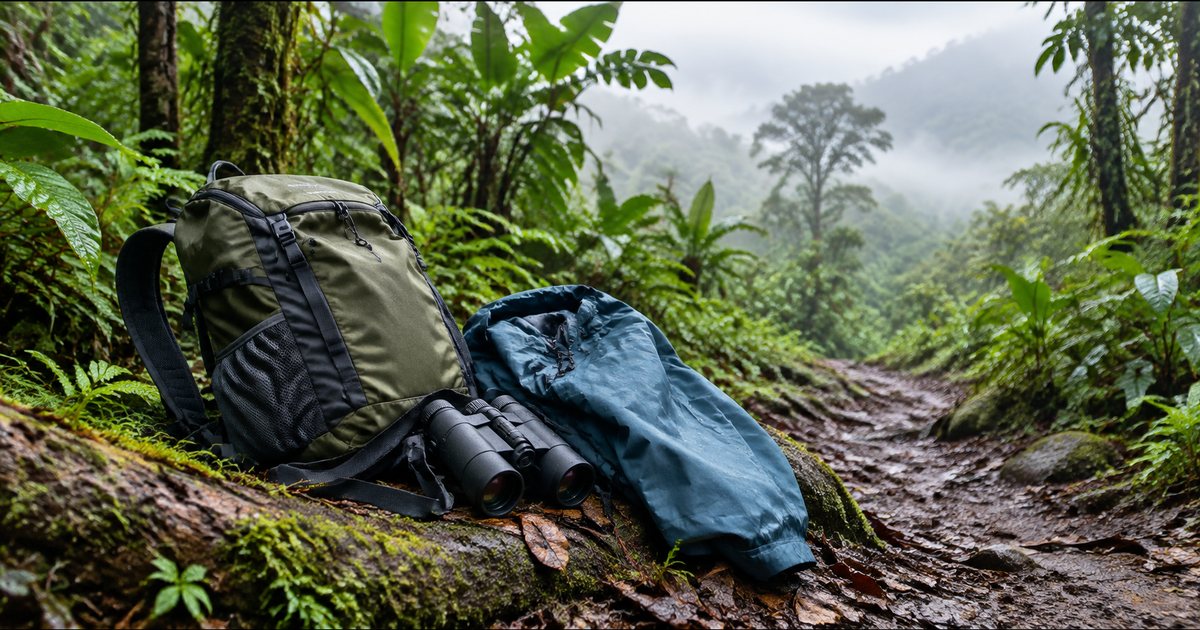
A guided day in the tropics often starts in the dark, includes at least one shower, and can swing from steamy lowland forest to chilly cloud forest by lunch. What's in your bag decides whether you're watching birds at 3 p.m. or wiping fog off your binoculars and thinking about the van.
This is a practical list for a single guided day in places like Costa Rica, Panama, Ecuador, or Colombia. It isn't a full trip packing list. It's what goes in the daypack.
Why tropical days are different
Three things catch people out.
Humidity. Everything gets damp, including the inside of your optics if you're not careful. Clothes don't dry overnight the way they do at home.
Rain that comes and goes. In many tropical regions rain is part of normal birding, not a reason to cancel. Some of the best activity can come right after a shower.
Elevation swings. A day that crosses a mountain range can start warm and end cold. Our Costa Rica regions post covers how big those changes can be within one country.
Ask your guide first
Before packing anything, send your guide a few questions:
- What elevations are we birding, and roughly what temperatures should I expect?
- How far will we walk, and on what kind of trail?
- Do you bring a scope? A spare pair of binoculars? A field guide or app for the region?
- Is lunch included, or do I bring food?
- Rubber boots or hiking shoes for this route?
- Any lodge or reserve rules I should know about (feeders, flash, trail closures)?
Local guides answer these all the time. Their answers beat any generic list, including this one.
Optics and keeping them dry
Binoculars. Waterproof and fog-proof models are worth it in the tropics. Forest birding often happens in low light, so brightness matters more than extra magnification.
Lens cloth. Bring two microfiber cloths in a zip bag. One gets wet; the other stays dry for the moment you need it.
Rain cover. A simple rain guard for the eyepieces and a bag or cover for the binoculars when it's really pouring.
Camera. If you're bringing one, add a rain sleeve and a dry bag. Don't change lenses in the rain.
Fogging. Cold optics fog when you step into warm, wet air, for example out of an air-conditioned vehicle. Ask the guide to keep the AC moderate, or let gear warm up in its case before you need it.
Scope. Most guides who work forest and open country carry one. If you bring your own, check with them first. A second scope on a narrow trail can get in the way.
Clothing for heat, rain, and elevation
- Light, quick-drying long sleeves and trousers. They help with sun and insects and dry faster than cotton.
- Neutral colors. Muted greens, browns, and greys are kinder to birds and other birders than bright white or neon.
- A light rain jacket or poncho. A poncho that covers your pack is handy in warm rain. A jacket is better if it'll be cold.
- A warm layer. Essential for early starts or high elevation. A fleece or light puffy that packs small.
- Hat. Brimmed for sun in open country; something warmer for high mornings.
- Spare socks. Wet feet are the fastest way to ruin a day.
Footwear
The answer depends on the trail, so ask. In muddy lowland forest many guides recommend rubber boots, and some lodges lend them. On drier or rockier trails, light hiking shoes with good grip work better. Whatever you choose, make sure it's broken in before the trip.
Bugs, sun, and health basics
- Insect repellent for mosquitoes, plus something for chiggers and ticks in grassy areas. Tucking trousers into socks helps.
- Sunscreen and lip balm. Open edges and canopy towers can be harsh even on cloudy days.
- Water. More than you'd expect. A refillable bottle or soft flask that fits your pack.
- Personal medication and a small first-aid kit: bandages, blister care, antihistamine.
- Talk to a travel health clinic before the trip about vaccines and anything else for your destination. That's for the whole trip, not just the day, but it's easy to forget.
Small things that make the day better
- A small, quiet daypack with a rain cover
- A headlamp for pre-dawn starts or owling
- A notebook or phone app for your list, and a power bank
- Snacks that don't melt
- A small towel or bandana
- Zip bags for phone, passport copy, and cash
- Small bills in local currency for park fees or tips, if your guide says you'll need them
What to leave behind
- Bluetooth speakers or playback. Leave audio decisions to your guide. Our birding ethics post explains why.
- Noisy rain gear. Crinkly ponchos and jackets carry in quiet forest.
- Big luggage in the vehicle. Keep the daypack light. Everything else can stay at the lodge.
- Strong scents. Heavy perfume or scented products are best skipped in the field.
A short checklist
- Binoculars, two lens cloths, rain guard
- Camera with rain sleeve (optional)
- Quick-dry long sleeves and trousers in muted colors
- Rain jacket or poncho, warm layer, hat
- Boots or shoes suited to the trail, spare socks
- Repellent, sunscreen, water, snacks
- Headlamp, power bank, zip bags, small cash
- Personal meds and a small first-aid kit
Getting ready for your trip
Bird Tripping is a free directory. You contact guides directly and arrange booking and payment with them, with no booking fee from us.